
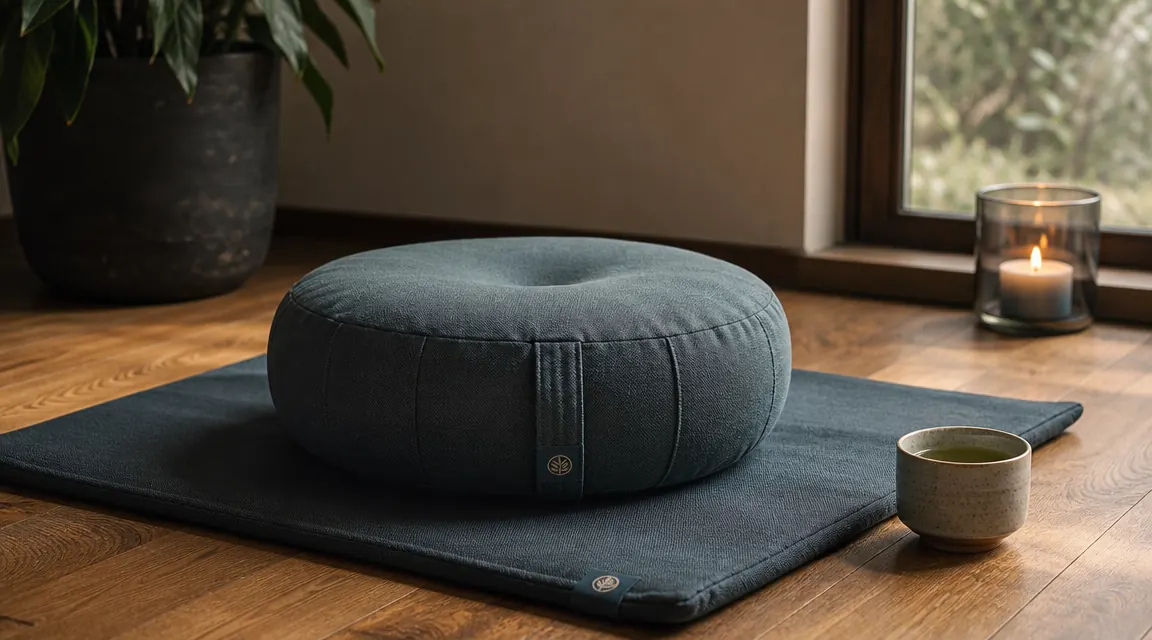
Last September I cleared a corner of my bedroom and decided that my morning sit would finally get a proper seat. I had been meditating on a folded blanket for two years, convincing myself that discomfort was part of the practice. It is, in small doses. But the hip ache that started appearing around the twelve-minute mark was not insight, it was just poor mechanics pulling my attention away from breath. I ordered the Hihealer Meditation Cushion Set, the large velvet zafu with buckwheat filling and the matching round mat, and I have used it every single morning since. Eight months. Somewhere around two hundred and forty sits. Here is what I have learned.
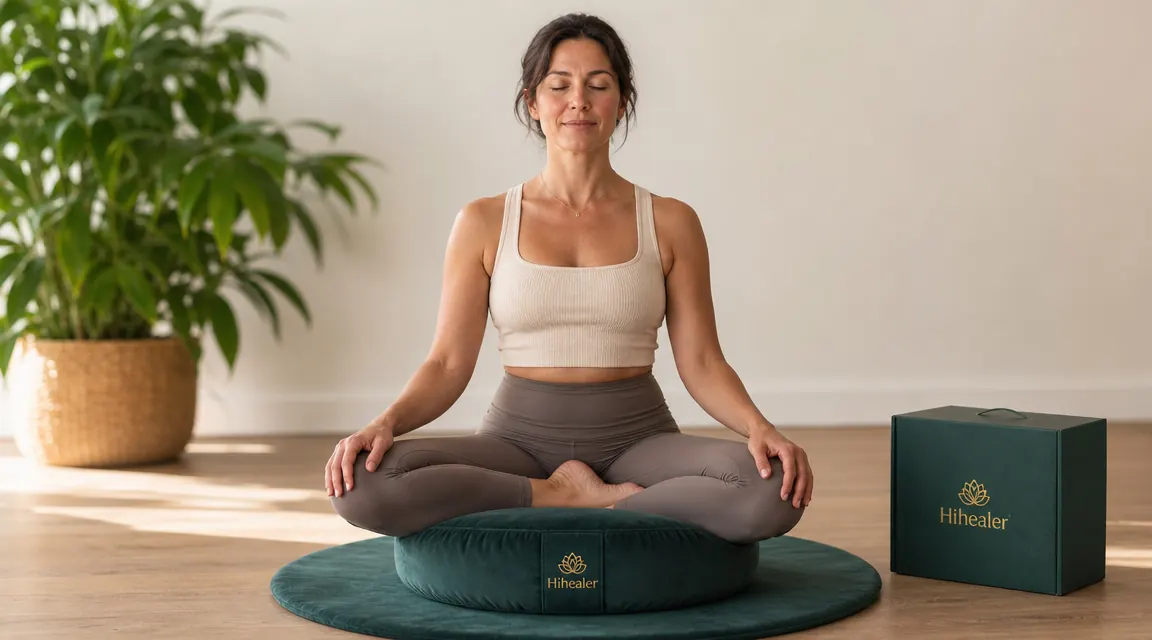
My setup: I sit in a loose half-lotus, left foot drawn in, right shin resting across. I weigh 134 pounds, I practice Ashtanga four mornings a week, and my sits run between fifteen and forty-five minutes depending on the day. I mention this because a cushion review without a body description is not particularly useful. Your experience may be different if you sit in Burmese, if you are heavier, or if your sits rarely clear twenty minutes.
The Quick Verdict
A well-made buckwheat zafu that genuinely changes the ergonomics of sitting, with minor caveats about velvet care and initial fill density.
Amazon Check Today's Price →If back pain is cutting your sits short, the problem is usually your seat, not your focus.
The Hihealer zafu and mat set (4.8 stars, 2,377 reviews) has been my daily seat for eight months. Check whether it is still in stock before your next morning sit.
Amazon Check Today's Price on Amazon →How I Have Used It
The cushion lives in the corner of my bedroom, not in a dedicated studio. It sits on the mat year-round, and I do not move it to another room or pack it away. I live in Portland, Oregon, which means the cushion has been through eight months of high indoor humidity, occasional dry heat from the radiator, and the general entropy of daily use. This is not a cushion I treat gently. I sit on it, lean against it during restorative poses, and have knocked it off the mat more than once.
My routine: alarm at 5:45, five minutes of gentle joint circles standing, then onto the zafu for anywhere from fifteen to forty-five minutes. I follow the sit with asana practice. The cushion is the first intentional thing I do each day, and that placement in the routine means I interact with it in a half-awake state, which is actually a useful test of its ergonomics. If I have to fuss with the fill or readjust the height before my mind settles, it disrupts the transition into stillness.
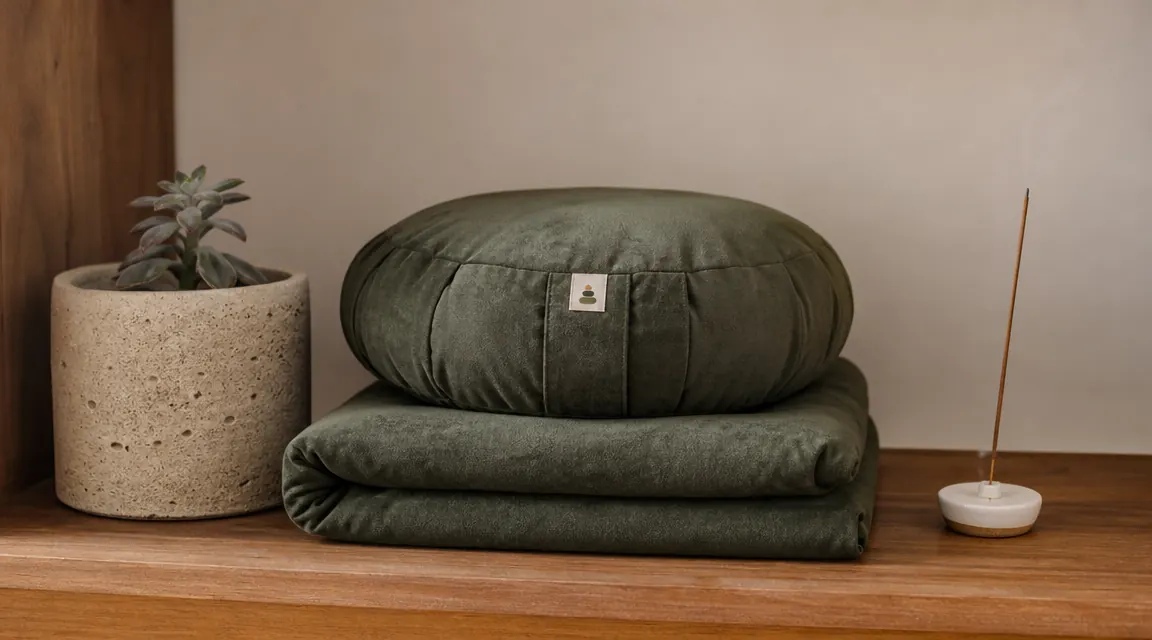
The Hihealer set I purchased is the large size in the deep blue-gray colorway. The zafu is approximately fourteen inches in diameter and five inches high when freshly filled. The mat is a thin round quilted base, roughly twenty-four inches across, that cushions the ankles and knees against the hard floor. Both pieces arrive with a simple carry handle stitched onto the zafu for easy transport.
The Buckwheat Filling: What Actually Happens Over Time
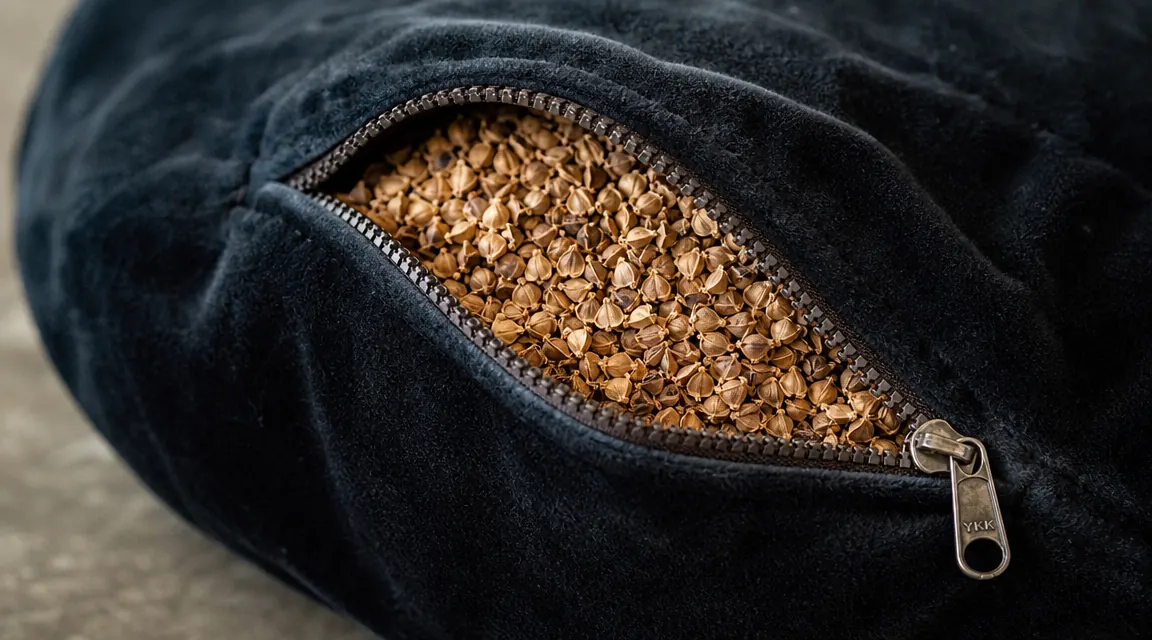
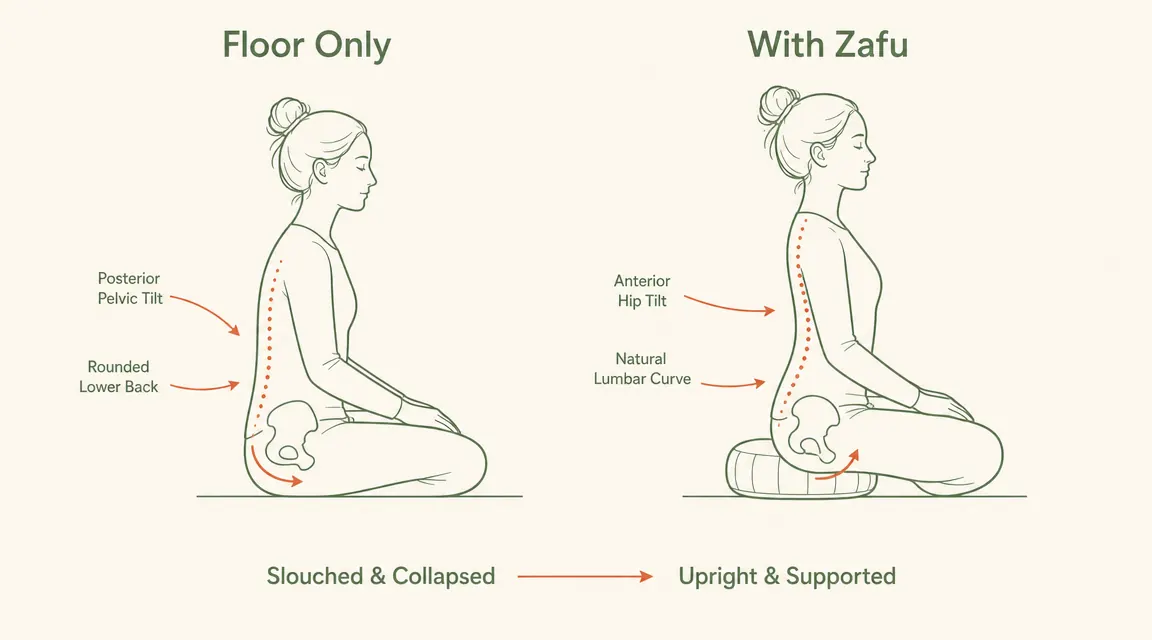
Buckwheat hull cushions have a reputation for being the gold standard of meditation seating, and after eight months I understand why. The hulls conform to your sit bones on contact, then hold that shape through the sit without gradually compressing the way foam or polyester fiberfill does. The sensation is closer to sitting on packed sand than on a pillow, which sounds uncomfortable until you realize that the conforming pressure is what distributes your weight evenly and allows your pelvis to tip forward into the anterior tilt that lets your spine stack.
What I did not expect was how much the fill would settle in the first thirty days. Out of the box, the zafu felt noticeably firmer and taller than it does now. I measured it against the wall in week one (about five and a half inches) and again at the two-month mark (closer to four and three quarters). The hulls compress and redistribute with use, and the cushion finds a stable density somewhere in month two or three that it then holds. My sit bones no longer hit the floor, but I am aware that a larger or heavier person might reach the floor faster and want to top off the fill. The zippered inner liner makes that straightforward.
One practical note: buckwheat hulls make a rustling sound when you shift weight. In a silent room at 5:45 in the morning, that sound is audible. It does not bother me. If you share a bedroom with a light sleeper, or if you sit with a teacher in a group setting and move frequently, it is worth knowing about.
The cushion does not fix your meditation. What it removes is the physical negotiation that keeps you from settling in. That is not a small thing.
Velvet Durability and the Care Reality
The velvet cover is where I had the most questions going in. Velvet reads as delicate, and a meditation cushion gets compressed, handled, and occasionally sweated on. After eight months the cover on my cushion still looks presentable. There is some directional pile wear in the area where my sit bones contact the surface, visible only in certain light, and one small area near the seam where the fabric has fuzzed slightly. Neither has affected function or appearance at a normal viewing distance.
I have not washed the cover because the care tag recommends spot cleaning, and I have had nothing to spot clean. A few mornings of sweaty practice have left no visible marks. I did press a damp cloth to the surface once to remove a faint dusty film that accumulated over several weeks, and the velvet responded fine, no watermarks. If you practice in a hot room or your sits are vigorous enough to perspire substantially, a removable washable cover from a third party might be worth the investment as a liner.
The stitching at the side seams and the carry handle has held without any loosening. The zipper on the inner liner opens and closes smoothly. I have zipped and unzipped it maybe four times to check the fill level and once to add a small handful of hulls I kept from the original packaging. No snags.
The Ergonomic Effect: What Changed in My Practice
Here is the part that actually matters. Within the first week on the Hihealer zafu, my sitting time extended without any intentional effort on my part. The hip ache that had been appearing at twelve minutes moved to around twenty-five, and by week three it had largely disappeared from my regular sits. I want to be careful not to attribute too much to the cushion alone, because I also adjusted my foot position slightly around that same time after reading about half-lotus mechanics. But the timing correlated with the cushion, and I have used it consistently since, so the data I have is what it is.
The anterior pelvic tilt the zafu creates is genuinely useful. When your pelvis tips forward, your lumbar spine settles into its natural curve rather than rounding backward, which reduces the muscular effort required to hold your torso upright. Less effort holding means less distraction from the effort. The Hihealer height, even after settling, is enough to produce this tilt for my proportions. Taller practitioners with longer torsos may need a higher cushion, and shorter practitioners might find even the settled height slightly aggressive on hip flexor range.
The Mat: Often Overlooked, Actually Useful
I almost skipped the mat when I ordered and bought only the zafu. I am glad I did not. The quilted round mat is not thick enough to add meaningful cushioning to the floor, but that is not what it is for. Its job is to stabilize the zafu so it does not slide on hardwood, to provide a visual boundary that signals where the practice happens, and to cushion the outsides of the ankles and the area around your knees when they contact the floor.
That last point was more significant than I expected. My right knee, which rests on the floor in half-lotus, was the source of low-level pressure on bare hardwood. On the mat, that pressure is enough reduced that I stop noticing it by the second or third minute of the sit. The mat has also stayed flat and retained its shape after eight months. No curling at the edges, no compression in the center.
What I Liked
- Buckwheat hull fill conforms to your sit bones and holds position through long sits without compressing flat
- Anterior pelvic tilt effect is real and measurable in how quickly hip and lower back discomfort arrives
- Velvet cover has held its appearance well after eight months of daily use
- Mat stabilizes the zafu and reduces ankle and knee pressure on hard floors
- Zippered inner liner allows fill adjustment as hulls settle over time
- 4.8-star rating across 2,377 reviews reflects consistent quality control
Where It Falls Short
- Buckwheat hulls make an audible rustling sound on weight shifts, noticeable in a quiet room
- Fill settles noticeably in the first two months, which can feel like a loss of height for heavier practitioners
- Velvet cover is spot-clean only, which limits care options for humid practitioners
- The mat, while useful, adds bulk to travel and is not worth packing for a short trip
Alternatives I Considered
Before the Hihealer I used two other cushions briefly. The first was a basic round cotton cushion from a discount yoga retailer filled with polyester fiberfill. It compressed to almost nothing in three weeks and required constant fluffing. The second was a kapok-filled zafu from a well-regarded meditation supplier that cost considerably more. The kapok version was lovely, quieter than buckwheat, and slightly warmer to sit on. I prefer the buckwheat for the conforming density, but the kapok is a reasonable alternative if the rustling sound is a genuine concern for you.
If you are weighing whether to buy a purpose-built zafu or simply repurpose a decorative floor pillow, there is a useful comparison in this piece on the differences between meditation cushions and floor pillows. The short answer is that the ergonomic geometry is entirely different, and a floor pillow will not produce the pelvic tilt that makes long sitting comfortable. And if you want to understand more broadly why the seat matters this much, the piece on 10 ways a zafu deepens your practice goes into the mechanics.
Who This Is For
This cushion is right for you if you have an established or developing meditation practice and your sits currently end because of physical discomfort rather than mental restlessness. If you are sitting on a folded blanket, a thin cotton cushion, or directly on the floor and the twelve-to-twenty-minute window brings hip ache or lower back strain, the Hihealer is the kind of practical intervention that removes a genuine obstacle. It is also right for you if you value how your practice space looks and feels. The velvet and the sage-green or blue-gray colorways are understated enough to fit most bedroom or studio aesthetics without looking like sports equipment.
Who Should Skip It
If you sit in a chair rather than on the floor, or if your practice is primarily restorative yoga and you need something soft enough to support your spine in reclined postures, this is not the right tool. A buckwheat zafu is firm by design, and that firmness serves sitting upright, not lying back. Similarly, if you travel frequently and want to bring your seat with you, the buckwheat fill makes this cushion heavy relative to its size, and the set is not compact enough to fit easily in a carry-on. A lightweight kapok or cotton zafu might serve you better as a travel piece.
Eight months in, I have not looked for a replacement. That is the clearest endorsement I can give.
The Hihealer zafu and mat set has 4.8 stars across 2,377 reviews on Amazon. If you are ready to give your morning sit a proper foundation, it is worth checking current availability.
Amazon Check Today's Price on Amazon →