
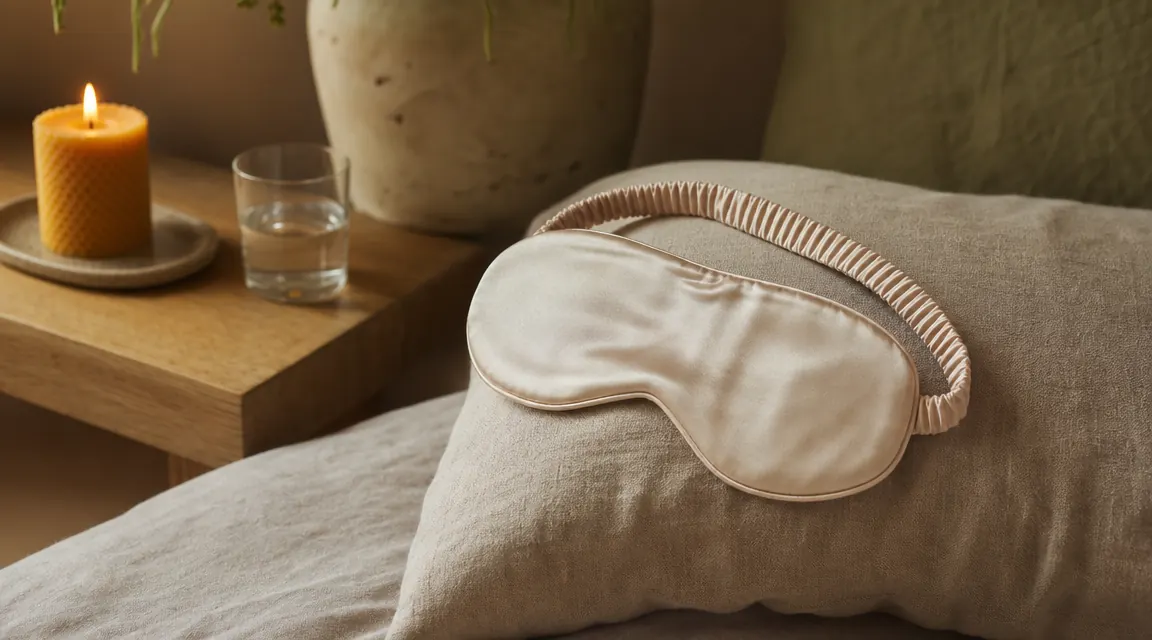
I want to be honest about where I started with this. When a friend mentioned she had switched to a mulberry silk sleep mask and noticed a difference, I had a quiet internal reaction that I am not proud of: I assumed she had bought into a wellness upsell. Silk pajamas, silk pillowcases, silk sleep masks. They are all sold with the same language, the same before-and-after framing, the same promise that your skin will thank you. I had been using a five-dollar foam mask from a travel kit for two years. It did the job. I was not interested in upgrading.
What made me finally try the 22 momme mulberry silk sleep mask was mostly stubbornness. I wanted to be able to say, with firsthand experience, that the difference was negligible. I ordered it. I used it. I was wrong. This is that review.
The Quick Verdict
The material difference is real and not just marketing. The silk is cooler against the skin, the adjustable strap actually holds, and the eye contour fit is better than most foam options at any price. The honest catches: it takes real discipline to wash and dry it properly, and if you lose or forget it you cannot just grab a replacement at an airport pharmacy. For anyone who already treats sleep with intention, it fits. For anyone who just wants something they can throw in a bag and forget, a slightly better foam mask will serve you more honestly.
Amazon Check Today's Price →If you have been assuming silk is a luxury add-on rather than a functional difference, here is where to read the reviews and make your own call.
The 22 momme mulberry silk sleep mask has over 5,500 ratings at 4.5 stars on Amazon. Adjustable strap, blackout design, genuine mulberry silk fill. Ships free with Prime. I was skeptical too.
Amazon Check Today's Price on Amazon →What the Product Listing Does Not Tell You
The Amazon listing for this mask does what most product pages do: it leads with the best version of the product. Genuine 22 momme mulberry silk. Adjustable strap. Comfortable eye contour design. 4.5 stars from thousands of buyers. What it does not lead with is the part where you have to hand-wash it in cool water, reshape it gently while wet, and then wait a full day for it to dry. This is not a catastrophic flaw. It is a real discipline requirement. If you travel frequently or wash your face gear impulsively, the silk mask will demand more of you than a foam one.
The listing also does not tell you that the first time you wear it, the silk will feel slightly cooler than you expect. Not cold, just noticeably different from foam, which tends to sit at room temperature. Silk regulates temperature against your skin in a way that is genuinely distinct. Within two or three seconds it adjusts to your body heat. But the first contact is different enough that it surprised me. If you have been wearing the same foam mask for years, the first night in silk is a noticeable sensory shift.
The third thing the listing does not tell you is about fit variation. The adjustable strap works well once you spend ten seconds dialing in your specific head size. Most people will find their fit quickly. But the adjustment has to be made deliberately. It will not auto-fit. I have seen reviewers complain about light leaking around the edges, and in almost every case it comes down to strap tension. Tighten the strap one notch past where you think is enough. Then test it in a lit room before you try to sleep in it.

What Changed That I Did Not Expect
The thing that moved me from skeptic to convert was not the silk itself. It was the morning. I had not connected my old foam mask to the crease lines I reliably woke up with across my left cheekbone. I sleep predominantly on my left side and I had just assumed that was a pillow issue. After two weeks in the silk mask, the crease was mostly gone. The silk glides against skin rather than catching and dragging. Repeated across hundreds of small movements through a night, that friction difference adds up to something you can actually see.
The second unexpected change was that I stopped waking up with that faint warmth around my eye area that I had normalized from foam. Foam is an insulating material. It traps body heat in the small space between the mask and your skin. Silk is a naturally breathable fiber. The temperature regulation is passive and quiet. You do not notice it as a sensation so much as you notice the absence of discomfort you had stopped registering as discomfort.
The morning crease across my left cheekbone was gone within two weeks. I had assumed it was a pillow issue for years. It was the mask.
The Part Nobody in the Review Section Talks About
Here is the honest catch that I have not seen clearly articulated in any review I read before buying: if you are someone who practices yoga or meditation in the evening and your wind-down routine is already fairly intentional, a silk sleep mask fits into that practice in a way that foam does not. That sounds abstract, so I will make it concrete. Foam masks feel like equipment. Silk masks feel like a care practice. That distinction matters more than I thought it would.
If you do a short restorative sequence before bed, or five minutes of pranayama, or even just a few minutes of deliberate breathing, the transition to lying down with a silk mask on completes that ritual in a way that feels coherent. It is not magic. It is just that the tactile quality of the material signals rest rather than blocking it out with equipment. I realize this sounds like the exact kind of thing a wellness marketing writer would say, which is why I resisted it for so long. But the experience is the experience.
The Real Cons, Stated Plainly
There are three genuine cons here, and I want to name them clearly rather than minimize them at the end after fourteen paragraphs of praise.
First: the washing routine is a real commitment. Cool water, gentle detergent designed for delicates, no wringing, flat to dry. You probably need to do this once a week if you wear it every night. The day it takes to dry means you need to either wash it in the morning so it is ready by evening, or own two masks so you are not without one during the dry cycle. I wash mine Sunday mornings, which has become a small ritual, but I want to be honest that it is not zero maintenance.
Second: the mask is not replaceable in a pinch the way a foam mask is. Foam masks are everywhere. Gas stations, pharmacies, airport newsstands, drugstore checkout lines. If you forget your silk mask on a trip, you are not replacing it same-day in the terminal. Plan to keep it in a specific pocket of your travel bag so it does not become the thing you leave on the bathroom counter of a hotel.
Third: the price-per-wear math is genuinely good only if you actually take care of it. The foam mask I had before this cost about five dollars and lasted roughly four months before the elastic gave out. This silk mask, with proper care, should last considerably longer. But if you machine-wash it or leave it in a hot car or toss it carelessly, you will shorten its life significantly. The economics work in your favor, but they require you to show up for the care routine.
What I Liked
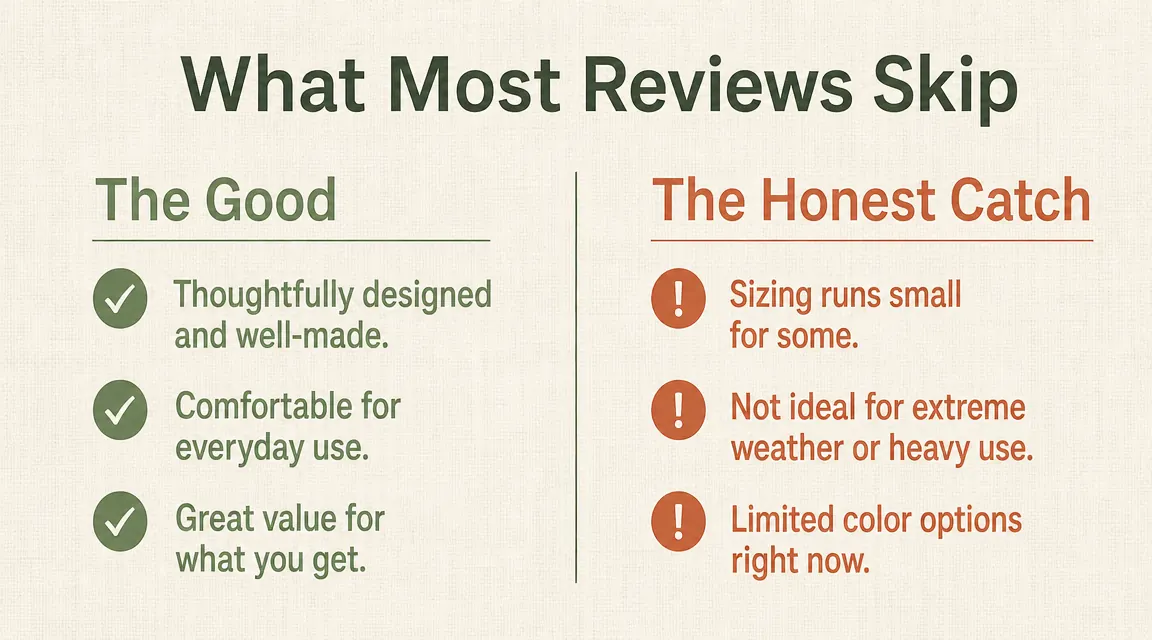
- Noticeably cooler against skin than foam, especially during warmer seasons
- Low-friction surface reduces morning creasing around the eye and cheek area
- Adjustable strap holds consistent tension and does not loosen overnight
- Blackout function is reliable when the strap is properly fitted
- Tactile quality integrates naturally into a bedtime wellness ritual
- No pilling or texture degradation with correct hand-washing over months of use
Where It Falls Short
- Requires hand-washing with cool water and a full day of flat drying
- Not replaceable at a pharmacy or airport if you forget it while traveling
- Longevity depends entirely on whether you maintain the care routine consistently
- First-night sensory adjustment period if you have only ever worn foam
How the Strap Actually Works (and Why It Matters More Than It Sounds)
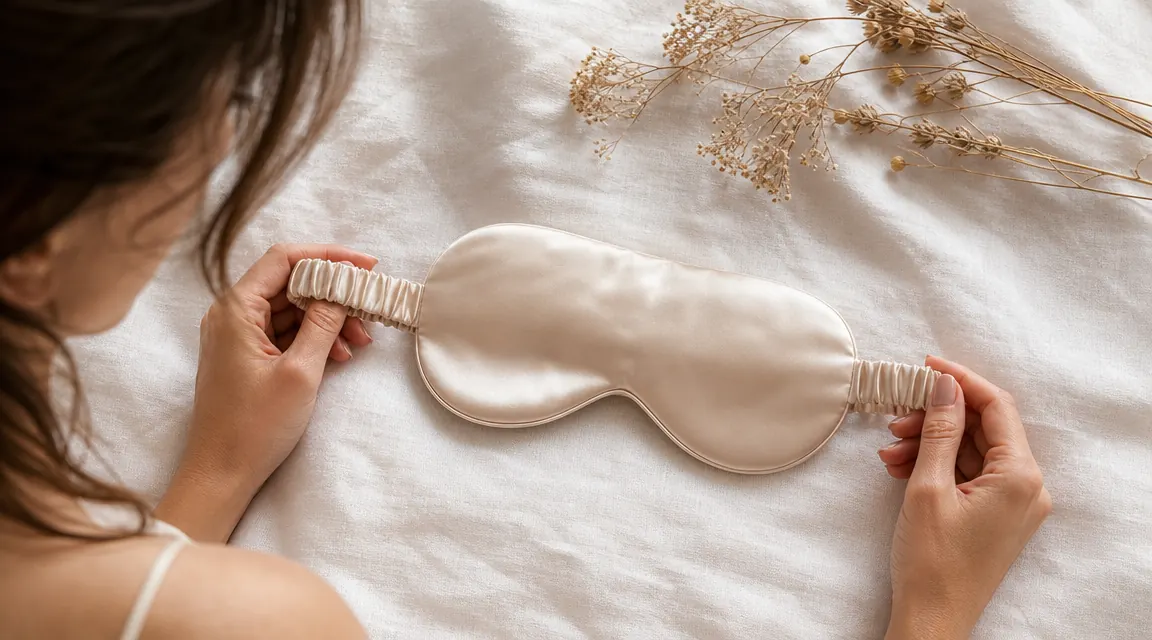
The strap on this mask uses a hook-and-loop adjustment rather than a fixed elastic band. I want to spend a moment on this because it is the detail that separates a mask that works from one that fails over time. Fixed elastic stretches. It is simple physics. Every time you put the mask on and take it off, the elastic deforms slightly. Over weeks and months the band that once held snug now sits looser, and the light blocking degrades accordingly.
Hook-and-loop adjustment lets you re-set the tension independently of how the elastic itself is aging. If the band loosens a fraction over time, you tighten the adjustment by one position. The fit is restored without replacing the mask. This is a design decision that reflects an understanding of how the product actually fails in real life. It is not glamorous, but it is the kind of practical engineering that extends the useful life of the product meaningfully.
Who This Is For
This mask makes the most sense for someone who is already taking sleep seriously. If you have blackout curtains, a consistent wind-down routine, a standard bedtime, and you treat sleep as part of your health practice rather than just the thing that happens when the day ends, this fits that context well. It is also well suited for people who have noticed morning puffiness or fine lines around the eye area and have been told by a skin care practitioner or aesthetician to reduce mechanical friction during sleep. The silk provides that reduction in a low-effort way.
It is a good choice for anyone who has dismissed sleep masks in the past because of discomfort. The molded eye contour, the breathable fabric, and the adjustable tension together address the specific complaints that drive people away from wearing masks consistently. The eye contour shape in particular keeps the silk from pressing directly on eyelids, which was the sensation I most disliked about rigid or overly padded foam versions.
Who Should Skip It
If your relationship with sleep is already maxed out in other ways and you are not willing to add one more care step to your routine, this is not the right purchase. The mask will end up in a drawer after you machine-wash it once and notice the fabric does not sit the same way. A slightly better foam mask, hand-washed occasionally or replaced when it wears out, will serve you more honestly.
Skip it also if you travel without a dedicated toiletry system. If your packing is improvised or you routinely forget things on hotel bathroom counters, the silk mask will end up left behind. It is worth protecting because it works well, and that protection requires some organizational habit. If that is not where you are right now, start with something more forgiving and come back to silk when your kit is tighter.
For related reading on this product, the long-form piece on six months of nightly wear covers the durability timeline in more detail, including how the mask holds up through washing over an extended period. And if you are still deciding between silk and satin, the breakdown on silk versus satin sleep masks explains the material difference clearly, including why satin is often positioned as an equivalent and why it is not.
If you have been on the fence, the honest answer is that the difference is real and the care commitment is manageable. Here is where to check current availability.
The 22 momme mulberry silk sleep mask is listed on Amazon with free Prime shipping. Over 5,500 reviews at 4.5 stars. The adjustable strap, blackout design, and genuine silk fill are all there. I went in skeptical. I stayed because the results were clear.
Amazon Check Today's Price on Amazon →