
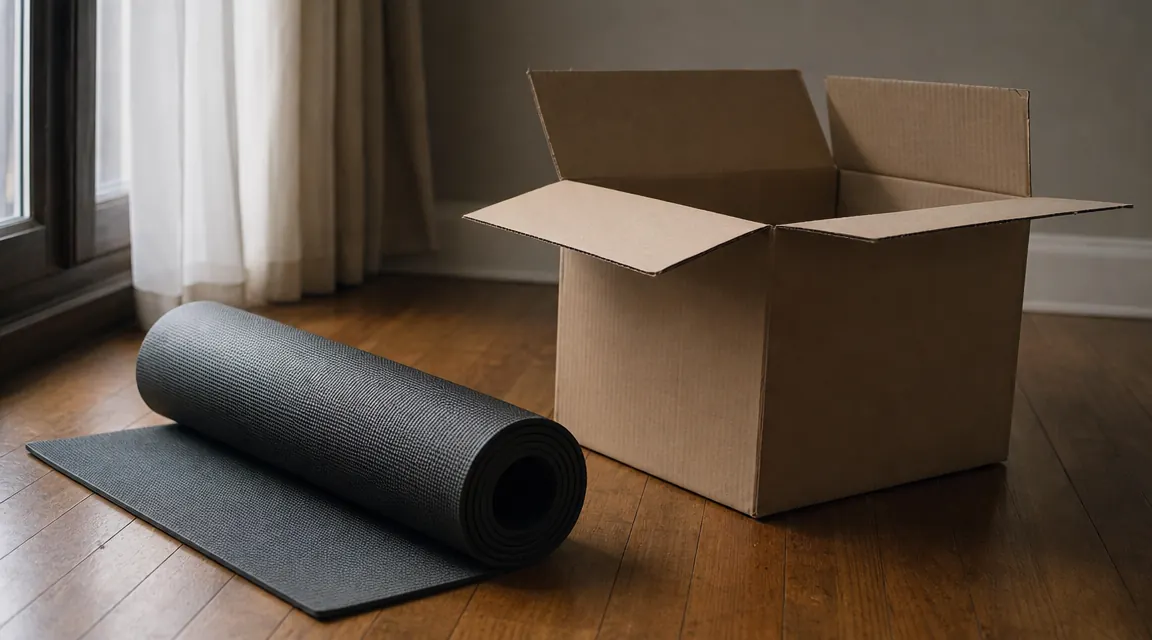
On day eighteen with the Manduka PRO, I printed a return label. I had paid for a mat that, according to the product page, the yoga community, and three separate teachers, was the last mat I would ever need. What I had in my living room was a 7.5-pound slab that made my hands slide in downward dog worse than the $40 mat I bought my first week of practice. I did not feel like a serious practitioner who had finally invested in quality equipment. I felt like I had been sold something.
I did not send it back. And the reason I did not, the specific thing that changed my mind, is the piece most reviews skip entirely. This article is about that, and about the three other things nobody told me before I bought the Manduka PRO that I now think are essential to understand before you spend close to $150 on a yoga mat.
The Quick Verdict
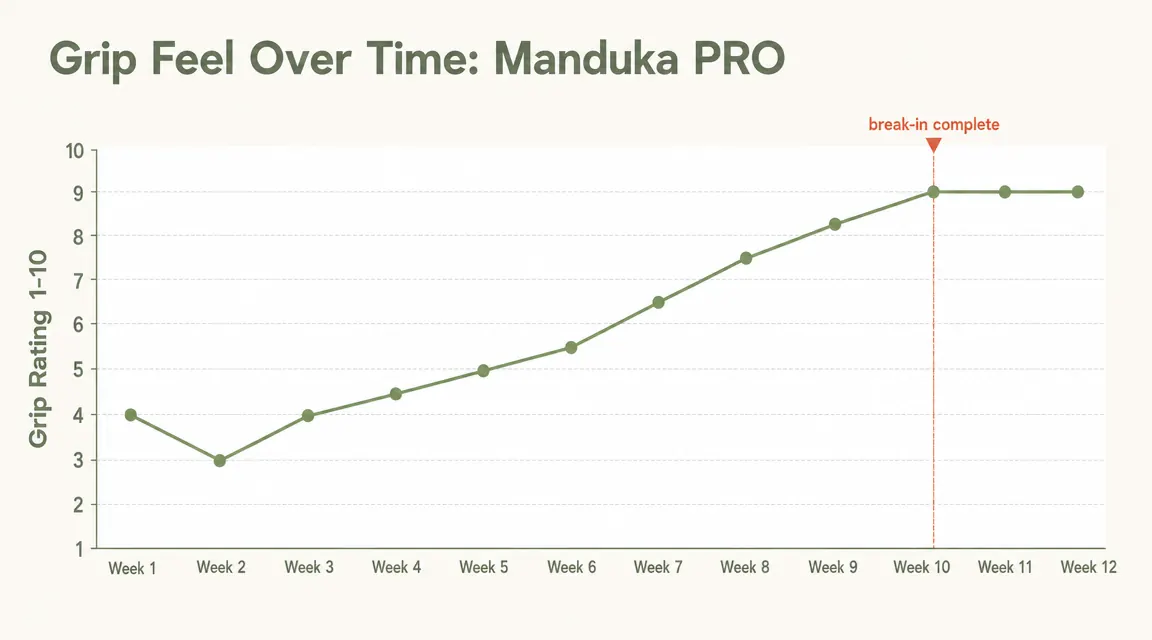
The Manduka PRO is genuinely worth it, but only if you understand that it performs terribly for the first six to eight weeks. If you are not prepared for that window, you will return it. Once past it, very little competes.
Amazon Check Today's Price →If you have ever returned a yoga mat thinking it was the wrong one, read the break-in note below first.
The Manduka PRO has a real, documented break-in period that most buyers do not know about. Once through it, the grip, durability, and floor feel are genuinely exceptional. This is the mat teachers keep for a decade. Check today's price and read what the break-in actually involves before deciding.
Amazon Check Today's Price on Amazon →How I Came to Own and Nearly Return This Mat
I had been practicing for about two years when I bought the PRO. Not a beginner, not a teacher, somewhere in the middle: someone who had graduated from drop-in classes to a home practice and a monthly studio membership, and who was tired of a mat that curled at the corners every time the temperature changed. Three separate instructors had named the Manduka PRO unprompted when I asked what they actually practiced on. That kind of consensus tends to end the research process for me. I ordered the slate color in 71 inches.
What arrived felt substantial in a way I had not anticipated. Dense. Heavy in a way that read, to my hands, as quality. The surface was smooth, almost glossy in certain light. I unrolled it on my hardwood floor and did a short practice. My hands slipped on the very first downward dog. I told myself it was just the newness of the material, that it would settle. It did not settle the next day, or the day after that. By day ten I had tried the salt scrub method I read about online. By day fifteen I was washing it with dish soap per a forum recommendation. Nothing helped meaningfully.
The Break-In Truth: It Is Not a Flaw, It Is the Feature Doing Its Job Wrong-End-First
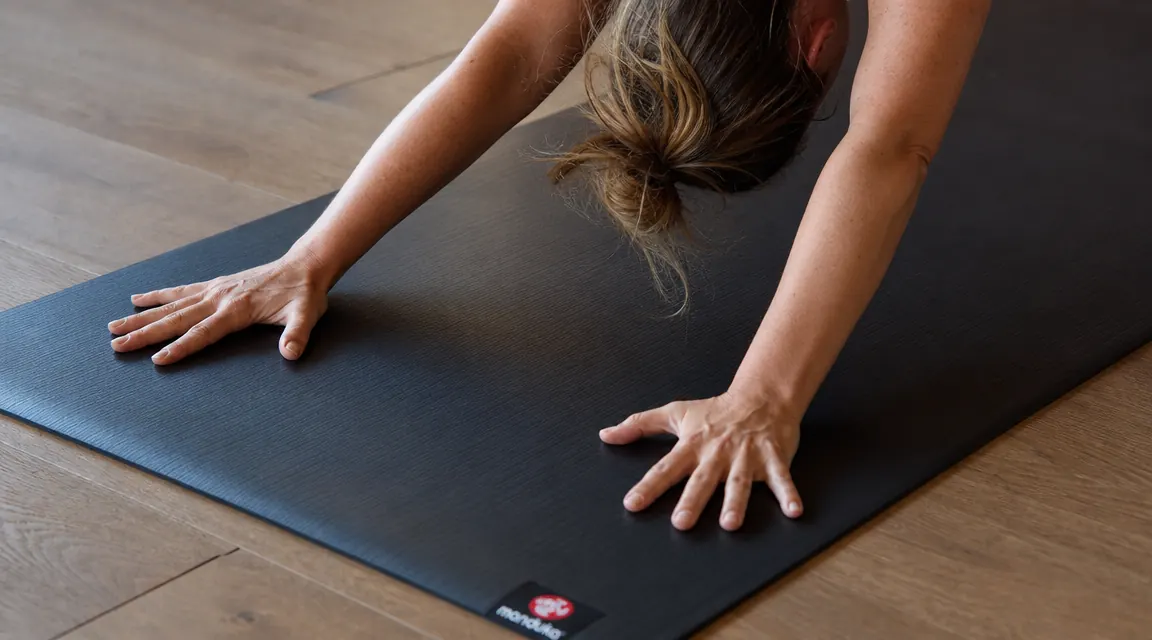
The Manduka PRO's top surface is closed-cell PVC. That construction is what makes the mat non-porous, which means it does not absorb bacteria, sweat, or odor the way an open-cell rubber mat does. It is also what makes the mat surface-slick when new. The closed cells have not yet been textured by use. Your body weight pressing through specific hand and foot positions over dozens of sessions is what opens the surface texture enough to create real grip. Manduka knows this. They do not explain it clearly enough on the product page, and most reviews do not explain it at all.
The thing I wish someone had told me: the break-in is not uniform. The areas where my hands land in downward dog broke in first, probably around session thirty. My feet took longer, closer to session fifty. The heel position in warrior one was still slightly slick at six weeks. The mat was not broken in all at once. It broke in the way a leather shoe breaks in, area by area, wherever pressure and friction were applied repeatedly. Once I understood that, I stopped treating the whole mat as broken and started noticing where the grip had arrived and where it was still forming.
I kept the mat because of a single message from a yoga teacher in an online community who described her first eight weeks with the PRO almost word for word the way I would have described mine. She said: wait until session sixty. Not session thirty. Not four weeks. Session sixty, counting from the first time you practiced on it. I was at session twenty-two when I read that. I kept going. She was right.
The break-in does not happen all at once. It follows your practice, area by area, wherever your body actually lands. By session sixty, I understood the mat differently than I had at session twenty.
The Weight Is a Lifestyle Question, Not a Product Flaw
Seven and a half pounds. That number is printed clearly in the product description, so you cannot say you were not told. What you cannot know from a number on a page is how it translates into your actual life. I want to try to give you that.
If your yoga setup is a dedicated corner of your home where the mat lives unrolled between sessions, the weight is completely irrelevant. You will pick it up to clean under it and put it back. That is it. If you drive to a studio, park close, and walk in, the weight is the mild inconvenience of carrying a bowling bag for ninety seconds. Annoying once, forgotten by week two. But if you take public transit, or if your studio is a fifteen-minute walk from where you park, or if you travel for work and want to maintain your practice on the road, 7.5 pounds matters in a way that compounds every time you have to carry it. I have watched people at my studio look pained carrying their PROs up three flights of stairs. I have also watched people arrive by bus, PRO in a sling, drenched in a different kind of sweat before class starts.
The honest question is not whether the PRO is too heavy in some abstract sense. It is whether your specific practice setup makes weight a meaningful variable. Be honest with yourself about that before you buy. The mat does not get lighter because you love it.
The PVC Problem and What I Actually Think About It
This is the part of the Manduka PRO review that makes people uncomfortable and then gets quietly left out. The mat is made from PVC. Polyvinyl chloride. Plastic. If you care about environmental footprint, and most people reading a yoga review in 2026 do, this is worth sitting with honestly rather than explaining away.
Manduka makes the point, and it is a fair one, that a single PRO mat lasting a decade or more generates less material waste than replacing three or four natural rubber or cork mats over the same period. Durability is its own ecological argument. The counter-argument is that PVC production carries a different kind of upstream cost in manufacturing. I am not a materials scientist and I am not going to pretend this is a simple calculation. What I will say is that I made my peace with the material by accepting that I am keeping this mat for as long as it holds together, which looks like it will be a very long time. If the idea of a PVC mat conflicts with your values in a way you cannot resolve, that is a legitimate reason to look at natural rubber alternatives. The Liforme mat is the most credible one. I have used it. It grips immediately and it does degrade faster. That tradeoff is real and yours to make.
What the Reviews Do Not Tell You About the Surface Feel
The PRO does not feel soft. This surprised me because the word cushioning appears frequently in the marketing language around it, and six millimeters sounds like a reasonable amount of foam. What you feel underfoot is dense and firm, not plush. In a long yin session, sitting in a seated forward fold for four minutes, my sit bones know they are on a firm surface. My knees in child's pose feel the floor through the mat in a way that I would describe as present rather than protected.
This is not a complaint. For most poses and most practice styles, firmness means stability, and stability in standing balances and warrior sequences is worth more to me than cushioning. But if you have sensitive knees or practice in a style that puts a lot of time in low-to-the-ground positions, you may want to use a folded blanket under your knees regardless of which mat you own. The PRO will not solve knee pain on its own. No mat will. What it will do is give you a stable, non-compressing surface that feels the same in month one and month eighteen.
One genuine surprise: the PRO grips the floor underneath it better than any mat I have owned. On my hardwood living room floor, the bottom of the mat stays completely planted. I have never had it shift under me. That is not something I thought to look for before I owned one, and now it is something I notice immediately when I practice on a mat that does not do it.
What I Liked
- Once broken in around session 50-60, grip quality is exceptional and improves further with continued use
- Surface degrades so slowly that the mat effectively does not wear out within a normal practice lifespan
- Closed-cell construction keeps the mat hygienic without aggressive cleaning routines
- Unmatched floor grip, the mat bottom never shifts on hardwood or tile
- Lifetime guarantee from Manduka is backed by an actual customer service process
- Firm, stable surface improves proprioception in balance poses
Where It Falls Short
- Break-in period is long, genuinely slippery for the first 40-60 sessions with no shortcuts that fully work
- 7.5 lbs is a real burden if your practice requires carrying the mat any meaningful distance regularly
- PVC construction is not environmentally neutral regardless of the longevity argument
- Firm feel is not ideal for practitioners who need significant knee or joint cushioning
- Hot yoga without a towel is a grip problem the closed-cell surface cannot solve

The One Thing I Would Skip Buying Alongside It
When you buy the PRO, you will almost immediately encounter recommendations to also buy a Manduka yoga mat towel. The reasoning is that the towel helps with grip during the break-in period and adds traction in sweaty classes. This is true. The towel does help with grip. It also adds an item to wash, an item to carry, and an item to arrange on the mat before every practice. My strong suggestion is to not buy the towel at the same time as the mat.
Here is why. If you buy the towel as a crutch for the break-in period, you will never move through the break-in. Your body weight will land on the towel rather than on the mat surface, and the mat surface will not develop the texture that eventually makes the towel unnecessary. I used a towel for the first six weeks and then stopped, which meant my mat's break-in reset. When I went back to bare mat at week seven, I was essentially starting the surface-breaking process over in some areas. If you want to buy a towel for hot yoga specifically, that is a different and legitimate use case. But do not buy it as an answer to the new-mat slipperiness. Let the mat do its work.
Who This Mat Is Actually Built For
The Manduka PRO rewards a certain kind of practitioner: consistent, patient, practice-in-one-place. It is a mat that suits people who understand their practice as a long-term project rather than a rotating enthusiasm. The durability and the break-in period are actually the same personality: this mat does not perform for you immediately. It performs with you, over time, as the relationship between your body and its surface develops. If that framing resonates with how you think about yoga in general, this is your mat. If you want something that grips perfectly on day one, feels gentle on your joints, and weighs nothing when you carry it, the PRO is asking you to compromise on all three of those things in exchange for something it delivers later. Only you know whether that trade is right for your practice.
I have a full side-by-side against the Liforme mat, which handles some of these tradeoffs differently, in my Manduka PRO vs Liforme comparison. And if you are earlier in the research process and still deciding whether a premium mat at this price point makes sense at all, the long-form account of how the PRO performs across 14 months is in my Manduka PRO long-term review.
Who Should Skip It
Skip the PRO if your practice is primarily hot yoga and you resist carrying extra gear. The closed-cell surface in a wet, heated room is a genuine limitation that a towel manages but does not eliminate, and if you are already spending on a premium mat, you should not need to solve its core limitation with an accessory purchase. Skip it if you are still building a consistent practice and are not yet sure the habit will hold. The PRO is a commitment device as much as it is a piece of equipment. It asks you to invest before it performs, and if you leave yoga at month four, that investment does not come back. Start with something in the mid-range and return to the PRO when the practice is clearly going to stay. Skip it if you are a dedicated traveler who wants one mat for everything. At 7.5 lbs, this mat will make you leave it at home, and a mat you cannot bring with you is a mat you cannot rely on.
Still deciding? The break-in window is the only real obstacle. Everything after it is excellent.
If you can commit to 60 sessions of patience on a surface that is building toward something rather than already there, the Manduka PRO will reward that patience for years. The lifetime guarantee means you are not taking the durability claim on faith. Check today's availability and color options on Amazon.
Amazon Check Today's Price on Amazon →