
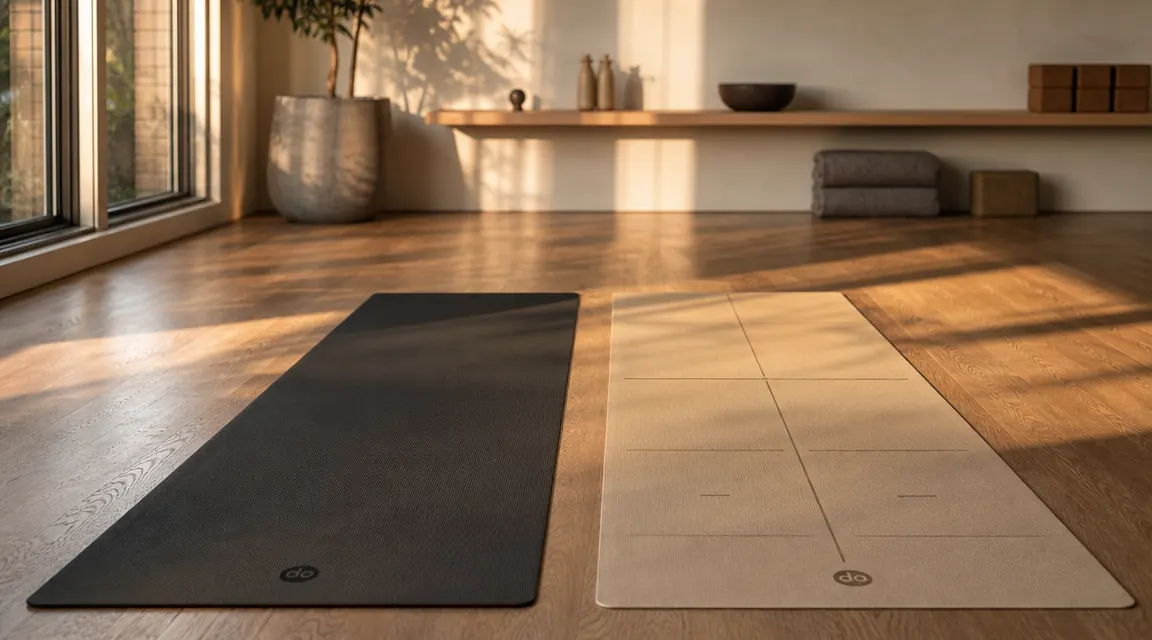
If you have been practicing long enough to know you need a better mat, you have probably already typed one of these two names into a search bar. The Manduka PRO and the Liforme are the two mats that teachers and long-term practitioners recommend most often. They are also the two that generate the most opinionated debates in yoga communities. I have used the Manduka PRO as my daily practice mat for over a year. I have borrowed a Liforme during a studio retreat, practiced on it for five days straight, and paid close enough attention to write this with some confidence.
The short answer: the Manduka PRO is the better mat for most serious practitioners. It lasts longer, cushions joints more, and its dense closed-cell rubber surface holds up to daily hot yoga and power flow without degrading. The Liforme has its own genuine strengths, most notably its printed alignment grid and its lighter weight. But for a mat you plan to own for a decade, the Manduka edges it on almost every axis that matters over time.
| Price Range | Around $144 | Around $150 |
| Thickness | 6mm | 4.2mm |
| Weight | 7.5 lbs (heavy) | 4.4 lbs (lighter) |
| Material | PVC closed-cell rubber | Natural rubber |
| Alignment Grid | None | Yes (AlignForMe system) |
| Grip Dry | Builds after break-in | Strong from session one |
| Grip Wet / Hot Yoga | Excellent once broken in | Degrades faster with sweat |
| Eco Credentials | Oeko-Tex certified, SGS-tested | FSC-certified rubber, carbon offset |
| Warranty | Lifetime | 1 year |
| Best For | Daily practice, longevity, joint support | Alignment learners, travelers |
Where the Manduka PRO Wins
The lifetime warranty is not marketing language. Manduka has a genuine no-wear-out guarantee on the PRO, and the construction justifies it. The mat is 6mm thick, dense enough that I can feel the difference in my knees during low lunges and in my wrists during extended planks. After a full year of daily practice, the surface still looks essentially the same as it did at six months. There are no flaking edges, no compressed spots, no areas where the grip has worn through. A quality tool does not announce itself. It simply holds.
The closed-cell PVC surface also means that the mat does not absorb sweat. You wipe it and you are done. The Liforme uses natural rubber, which is porous and traps moisture and odor over time if you are practicing daily. For a hot yoga practitioner or anyone who sweats significantly, that distinction becomes meaningful within a few months. The Manduka's grip actually improves over the first dozen sessions as the surface releases its manufacturing sheen. The first week can feel slippery, which surprises people. But that break-in period is real and the grip that follows is consistent for years. You can read the full account of the break-in experience in the Manduka PRO honest review.
Where the Liforme Wins
The Liforme's AlignForMe grid is genuinely useful, and I do not say that dismissively. For someone developing a home practice without a teacher in the room, seeing clear lines for hand and foot placement accelerates the body's spatial learning. Practitioners who have been told repeatedly that their front foot is too far forward, or that their hips are not squaring properly, often find the Liforme cuts months off the correction process. The lines are printed, not just embossed, so they stay visible through heavy use.
The Liforme is also nearly three pounds lighter than the Manduka PRO, which matters if you carry your mat to a studio several times a week. At 4.4 lbs, it rolls into a bag without the weight becoming a daily friction point. The natural rubber is warmer underfoot in cold morning practices, and many people find the initial grip from session one more reassuring than the Manduka's break-in period. Liforme's eco-story is also strong. FSC-certified natural rubber, carbon-offset shipping, and biodegradable materials speak to values that matter to many practitioners in this space.
If you want a mat that outlasts every other purchase you make for your practice, this is it.
The Manduka PRO has 8,953 Amazon ratings at 4.6 stars and a lifetime guarantee that the company actually honors. Daily practitioners consistently report using the same mat for five, eight, and ten years.
Amazon Check Today's Price on Amazon →Grip: The Factor That Matters Most in Practice
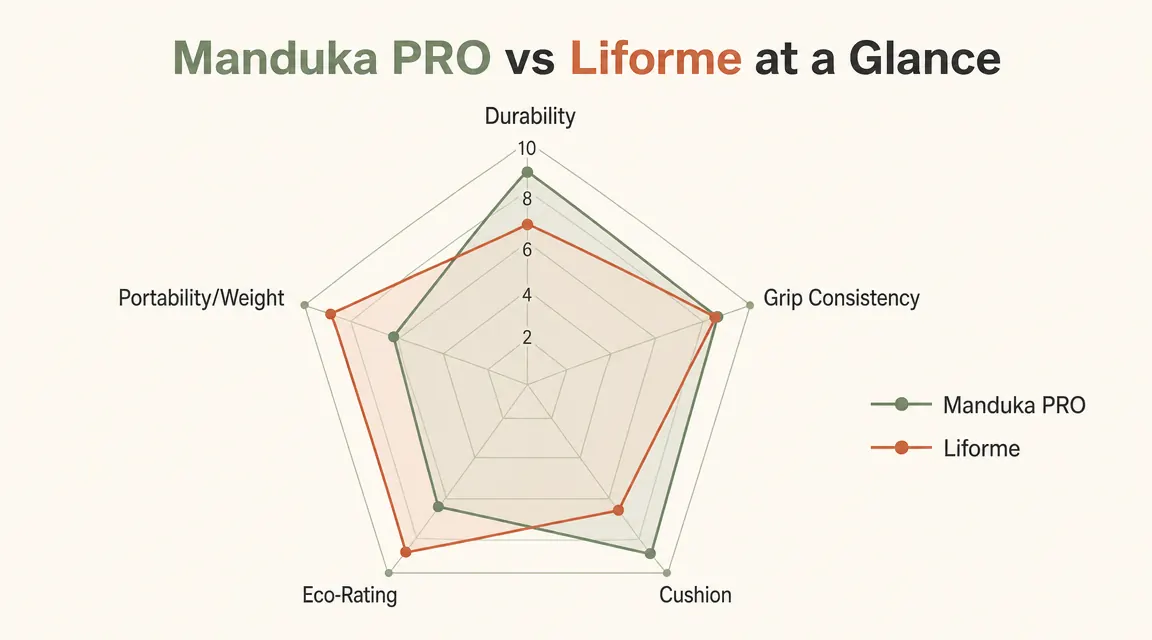
Grip is where most people's mat decisions should really land, and where the comparison gets nuanced. The Liforme grips better on day one. Natural rubber has inherent traction, and many students feel more secure immediately, especially in standing poses. But natural rubber is also sensitive to heat and sweat. In a hot yoga class or an intense vinyasa session, the Liforme's grip can become unreliable when the surface is saturated. A towel on top handles this, but that adds cost and variables.
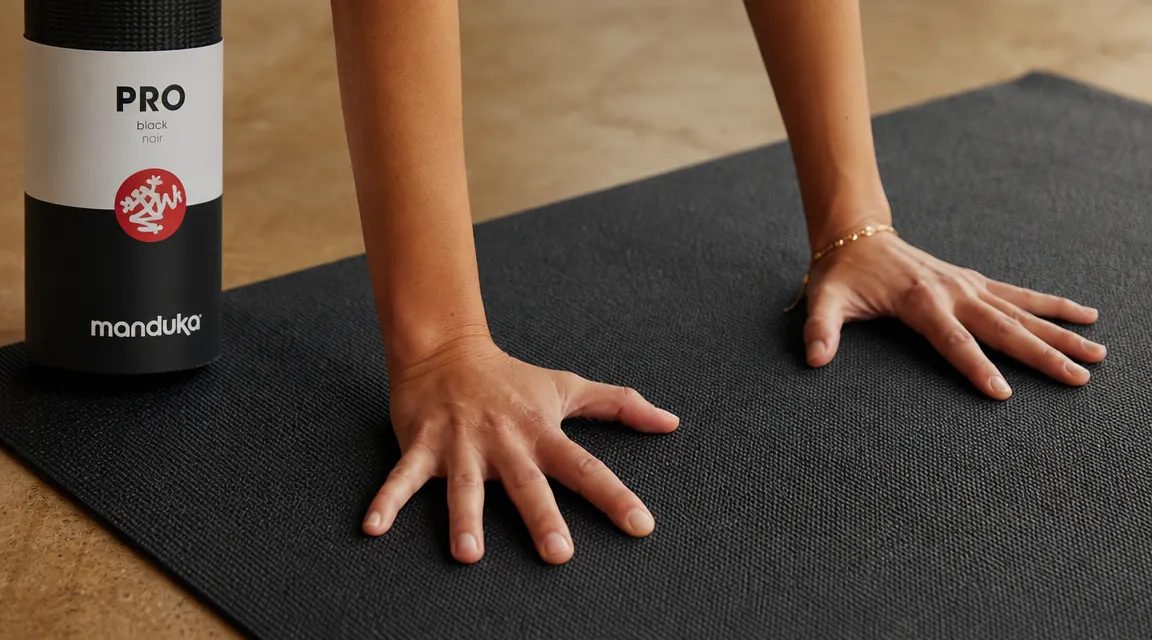
The Manduka PRO's closed-cell surface works in reverse. It starts slightly slippery and builds grip over time. By session ten or fifteen, the surface has a quality I can only describe as anchored. My hands do not feel like they are gripping anything. They just do not slide. In heated classes, the slight moisture actually activates the surface rather than degrading it. If you practice in a hot environment most of the time, the Manduka's long-term grip performance is more reliable than the Liforme's.
Cushion and Joint Support: Six Millimeters Changes Things
The 1.8mm difference between the Manduka PRO (6mm) and the Liforme (4.2mm) sounds small. It is not, when your knees are in low crescent for two minutes or your wrists are loaded in chaturanga. I noticed this directly when I practiced on the Liforme during the retreat. My knees were fine, but I could tell the floor was closer. After a week my wrists were slightly tender in a way they had not been on my Manduka. If you have any history of joint sensitivity, the Manduka's cushion depth is not a luxury. It is protection.
The Liforme's 4.2mm thickness is still adequate for most practitioners without joint issues, and the slightly thinner profile is part of why it is lighter. It is a trade-off, not a flaw. But for a practitioner who is over 35, practices daily, or has any wrist or knee history, six millimeters is the decision.
The mat is not the practice. But the right mat removes every small friction that interrupts the practice. That is worth thinking about.
Durability: Where the Lifetime Guarantee Tells the Story
The Manduka PRO's lifetime guarantee is a real differentiator over time. Natural rubber mats, including the Liforme, tend to compress over a few years of intense daily use. The Liforme warranty covers only one year. Manduka's closed-cell PVC does not compress, does not flake, and does not degrade in the way rubber does under sustained load. For a daily practitioner, that gap in longevity can mean the Manduka is effectively the less expensive mat over a five or ten year period, even though the sticker prices are nearly identical today.
I have seen older Manduka PROs in studio prop closets that are still in active daily use after eight-plus years. The surface has a worn-in quality but the structure is intact. I have not seen a Liforme hold up comparably at the same age under comparable use. That does not make the Liforme a poor mat. It makes it a different category of investment.
Eco-Credentials: Honestly, Both Are Reasonable
This is worth addressing directly because it comes up in every yoga community discussion of these two mats. The Liforme uses FSC-certified natural rubber with carbon-offset shipping and biodegradable packaging. That is a genuinely strong eco-profile. The Manduka PRO is made from PVC, which is a synthetic material, but Manduka addresses this through Oeko-Tex Standard 100 certification (meaning no harmful substances are released during manufacturing or use) and SGS safety testing. The PRO is also made in China under documented manufacturing standards.
If sourcing from natural, renewable materials is a core value for you, the Liforme is the more coherent choice. If you define eco-responsibility as longevity and waste reduction, buying one mat that lasts a decade is arguably the greener act. Both positions are defensible. I am not going to tell you which one to weigh more heavily in your own practice.
Who Should Buy the Manduka PRO
The Manduka PRO is the right mat if you practice daily or near-daily, you practice in a hot environment at least some of the time, you have any wrist or knee sensitivity that benefits from cushioning depth, and you want to buy one mat and stop thinking about mats. It rewards commitment. The break-in period is real and some practitioners genuinely find the first two weeks frustrating. But the mat that comes out the other side of that period is one of the most reliable tools I own for my practice. If this sounds like your situation, read the full long-term account in the Manduka PRO long-term review before you buy.
Who Should Buy the Liforme
The Liforme makes more sense if you are earlier in your practice and actively working on alignment, you travel frequently and the three-pound weight difference in your bag is genuinely meaningful, you practice in a non-heated environment where natural rubber grip performs reliably, or the natural rubber and biodegradable sourcing matters more to you than longevity. It is a beautiful mat. The alignment grid is not a gimmick. And there are practitioners who will prefer the feel of natural rubber underfoot regardless of the other trade-offs. Both mats are honest tools built with care. The question is which philosophy of practice they reflect, and which one matches yours.
For daily practice, joint support, and a mat you buy exactly once: the Manduka PRO.
Lifetime guarantee, 6mm cushion, closed-cell grip that holds in the heat. Over 8,900 reviews and more than two decades of teacher recommendations.
Amazon Check Today's Price on Amazon →