

A note from Sungie: this is the story of how I ended up on a Manduka PRO yoga mat, and why the upgrade mattered more than I expected.
For two years I practiced on a mat I found at a discount sporting goods store. It cost me around twenty dollars, it was purple, and it smelled faintly of rubber for months. I told myself that was fine. Yoga is about the mind, not the gear. Marcus Aurelius did not need a Lululemon mat to reflect on virtue. Neither did I.
I was wrong, in the way that is both small and significant. The mat was not getting in the way of my philosophy. It was getting in the way of my pose.
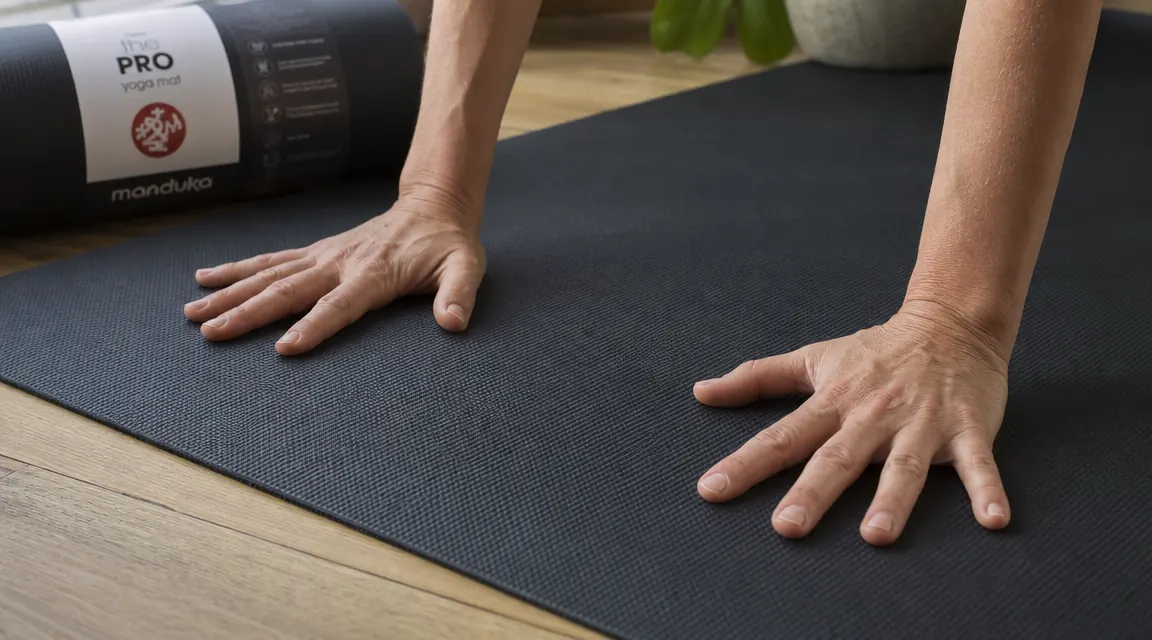
Specifically, my hands. Every Downward Dog started fine for about four breaths, and then my palms would begin their slow slide toward the front edge. I would grip harder, tense through my shoulders, and suddenly half my mental energy was devoted to not face-planting instead of actually lengthening my spine. I compensated. I developed subtle habits around the slippage. Shorter holds. Less weight in my hands. A kind of vigilance that passed itself off as effort.
It was only when I strained my left hamstring during a standing split in the spring of 2024 that I started to interrogate those habits honestly. My physical therapist, a woman named Darya who practiced Iyengar and had opinions about everything, looked at my description of how I held my poses and said, with zero ceremony, that my mat was probably part of the problem. Poor surface feedback, she said. You are always slightly braced.
I was not practicing yoga on a mat. I was practicing yoga around a mat. There is a difference, and it had taken me two years to feel it.
I did not buy the Manduka PRO the next day. I spent three weeks reading about it, wincing at the price, and convincing myself that any decent mat would be sufficient. I tried a mid-range foam mat from a yoga boutique. It was better, but it had the structural integrity of a thick bath towel. I tried another, slightly firmer option with grip dots. The dots did nothing on my hardwood floor.

Eventually I ordered the Manduka PRO. I chose the black, 6mm version. When it arrived it was heavy in a way that surprised me, 7.5 pounds of dense PVC that did not feel like yoga mat packaging. It felt like something that had been engineered.
The first week was instructive. The PRO has a break-in period that nobody warns you about in a friendly enough way. The surface is closed-cell, which means it does not absorb sweat or bacteria, but it also means it starts slick. I practiced with a damp towel nearby for about eight sessions until the surface roughed up slightly and found its grip. A patient process. The Stoics would have approved.
After that, something changed. Not dramatically, not all at once. But gradually I noticed that I was not bracing anymore. My hands stayed where I put them. My Downward Dog lengthened by maybe two inches, because I could actually shift weight back through my heels without my palms compensating. My Warriors felt planted. My balance poses, Tree and Eagle and the half-moon that had always felt like controlled falling, became something closer to actual stillness.
I practiced on the PRO every morning for four months before I went back to the cheap purple mat for one session, just to test my memory of it. One session was enough. I had genuinely forgotten how much energy went into managing that surface rather than inhabiting my body on it.
What I'd Tell You If We Were Sitting at My Kitchen Table
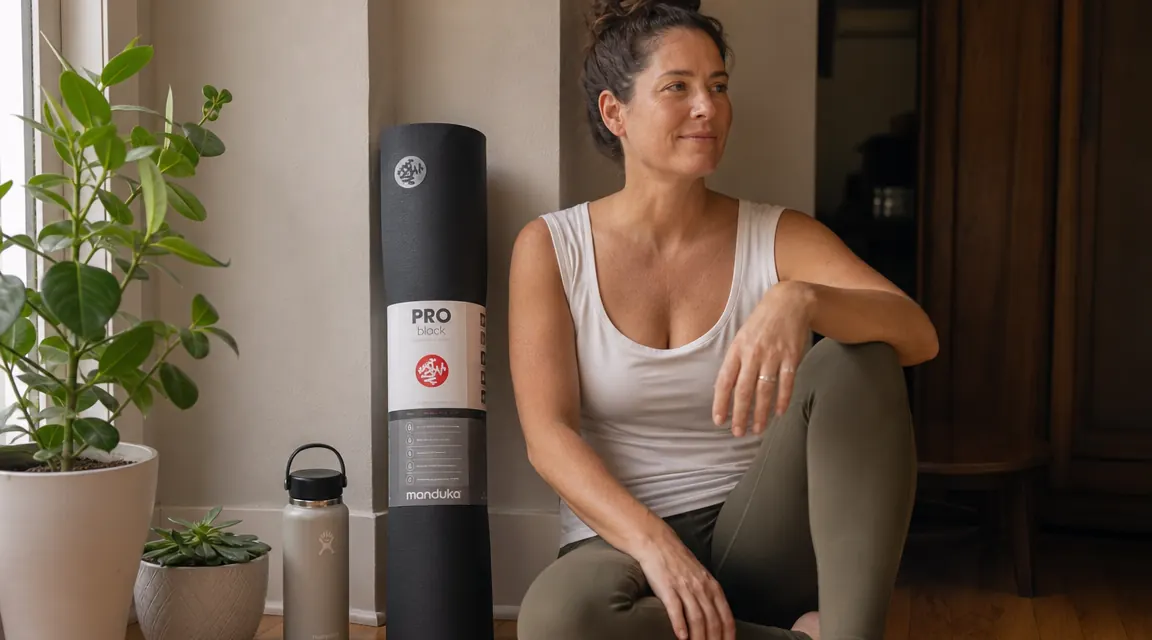
Here is the honest version. The Manduka PRO is 7.5 pounds and it will feel like a lot to carry to a studio. The break-in period is real and mildly annoying. If you practice hot yoga, you will want a towel over it because even broken-in PVC does not love heavy sweat. And yes, you will have a moment in the first week where you wonder if you made a mistake.
But I have been using mine almost daily for over a year. The seams have not separated. The corners have not curled. The surface has not thinned or pilled. A mat built like that, with a lifetime guarantee and the kind of density that actually supports your joints through high-load poses, is not gear for its own sake. It is gear that quietly removes obstacles. And removing obstacles is what practice is supposed to do.
If you have been practicing on something that makes you fight for your foundation, even slightly, I would encourage you to try this one. Not because a mat will fix your practice, but because once the mat stops being a problem, you might be surprised how much space opens up for everything else.
Your foundation deserves the same intention as your practice.
The Manduka PRO has a lifetime guarantee and a 4.6-star rating from nearly 9,000 verified buyers. It is heavier than most mats and worth every ounce.
Amazon Check Today's Price on Amazon →If you want a longer look at how the mat holds up over time, I wrote a detailed 14-month review: Manduka PRO Review: 14 Months of Daily Practice on One Mat. And if you are weighing it against the Liforme, that comparison is here: Manduka PRO vs Liforme: A Side-by-Side Comparison for Serious Practitioners.
Still on the fence? The current price and reviews are worth a look.
Nearly 9,000 teachers and practitioners have left reviews on this mat. The pattern in what they say might answer the question you have.
Amazon Check Today's Price on Amazon →